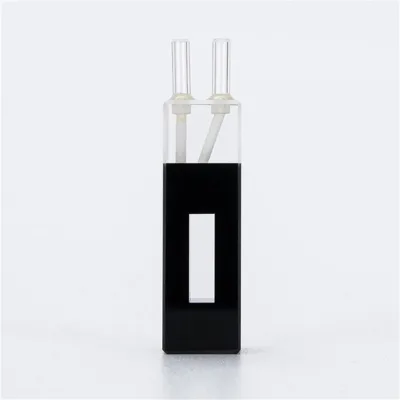
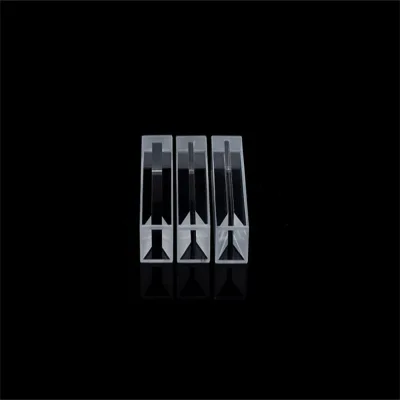
Source fluorescence cell micro quartz cuvette for Lab, Pharmacy, Microscopy
Find 30 verified suppliers offering the fluorescence cell micro quartz cuvette with customizable optical paths and materials like quartz or optical glass. Buyers can compare specifications including wavelength ranges, volumes, and certifications such as RoHS and CE for laboratory and pharmaceutical applications.
Key considerations
Products List


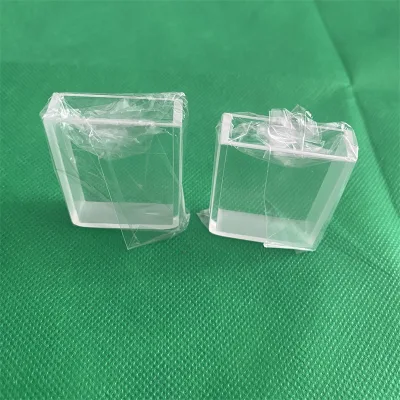
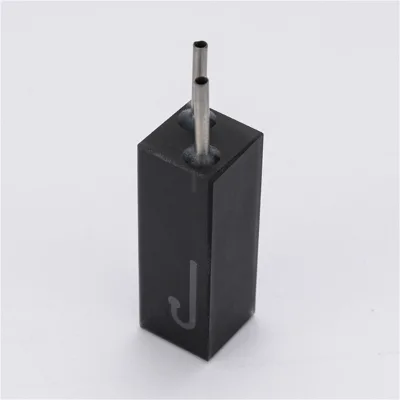
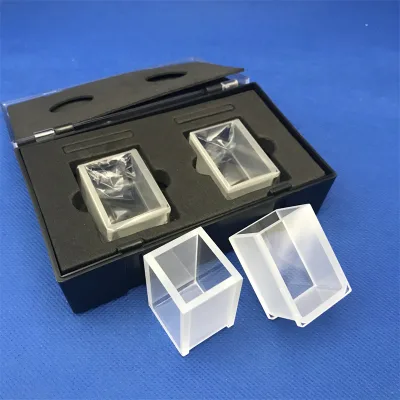
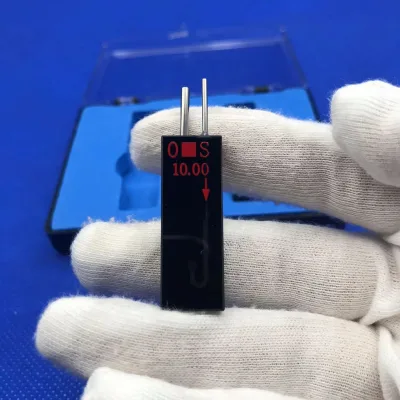

Comprehensive Sourcing Guide
Strategic Sourcing Guide for Fluorescence Cell Micro Quartz Cuvettes
Understanding Technical Specifications and Optical Performance
When sourcing a fluorescence cell micro quartz cuvette, the primary focus must be on the optical path length and the spectral range compatibility. The product attributes indicate that these cells are designed for high-resolution applications, often utilizing a classic spectrometer principle. Buyers should verify that the optical path length aligns with their specific instrument requirements, as observed data points to standard configurations of 5mm, 10mm, and 20mm. It is critical to distinguish between path length (distance light travels through the sample) and wavelength sensitivity. The observed specifications list a wavelength range of 200nm to 380nm, which covers the ultraviolet spectrum, while other entries reference visible spectrometer compatibility. This suggests that a single product line may encompass different models optimized for specific spectral windows.
The material composition is a decisive factor for fluorescence applications. The supply data highlights the use of Es Quartz and Optical Glass. For micro fluorescence cells, quartz is generally preferred over standard glass due to its superior transparency in the ultraviolet range and higher chemical resistance. The optical clarity is described as "Clear," though some variations may offer "Clear or Black" options, likely for light-blocking purposes in specific assay types. The volume capacity is another critical specification, with observed data indicating a 0.17 Ml capacity. This micro-volume requirement is essential for samples that are scarce or expensive. Buyers must ensure that the physical dimensions, such as the 4512.57.5mm size or custom-drawn dimensions, fit the sample holder of their fluorometer. The wall thickness, observed in the range of 1-5mm, also impacts the optical path and the mechanical stability of the cell during high-temperature or high-pressure operations.
Compliance, Certification, and Material Standards
Verifying compliance with international standards is a non-negotiable step in the procurement process for laboratory apparatus. The observed product data consistently lists certifications including RoHS, ISO, and CE. These certifications indicate that the manufacturing process adheres to environmental restrictions on hazardous substances (RoHS), meets general quality management system requirements (ISO), and complies with European health, safety, and environmental protection standards (CE). However, buyers should not assume that every listed product automatically satisfies all these criteria without requesting specific documentation for the batch being purchased.
The material purity is another area requiring strict verification. The data mentions a purity level of greater than 99.99% for the quartz or glass material. In fluorescence spectroscopy, impurities in the cuvette material can cause background fluorescence, leading to inaccurate readings. Therefore, the buyer must confirm that the "Es Quartz" or "Optical Glass" meets the specific purity standards required for their analytical sensitivity. The standard for these products is often listed as "Customized" or "Normal size," implying that while standard dimensions exist, the material grade and optical properties may vary based on the specific order. The origin of the products is noted as China (Mainland), specifically Jiangsu, a region known for optical manufacturing. While the location provides context for the supply chain, the buyer's focus should remain on the certification documents and material test reports rather than the geographic origin alone.
Cost Drivers and Pricing Variables
The pricing structure for fluorescence cell micro quartz cuvettes is influenced by several distinct variables, including material grade, customization level, and order volume. The observed price range in the market spans from 0 to 85 USD, a wide variance that reflects the difference between standard off-the-shelf items and highly specialized, custom-engineered cells. The lower end of the spectrum likely corresponds to standard glass or basic quartz cuvettes with fixed optical paths, while the higher end represents custom-sized cells with specific optical coatings or high-purity quartz.
Order volume plays a significant role in the final unit cost. The observed Minimum Order Quantity (MOQ) ranges from 2 to 10,000 units. Purchasing small quantities, such as 2 or 10 units, typically incurs a higher per-unit cost due to the setup and handling fees associated with small-batch production. Conversely, bulk orders approaching the 10,000-unit threshold can significantly reduce the per-unit price. Buyers must balance their immediate inventory needs against the potential savings from bulk purchasing. Additionally, the customization factor is a major cost driver. Products listed with "Customized" standards or "Per Request" dimensions will inherently cost more than those with standard specifications like 2602003mm or 1001000.5mm. The packaging method, whether "Carton Packaging," "Neutro-Packing," or "Export Wooden Box," also adds to the overall cost, particularly for fragile optical glass items requiring high-impact protection during shipping.
Typical Applications and Operational Context
Fluorescence cell micro quartz cuvettes are primarily designed for laboratory apparatus usage, serving as critical components in analytical chemistry and biochemistry. The observed applications include micro-fluorometer cells and general laboratory spectroscopy. These cells are essential for detecting and quantifying the fluorescence of chemical compounds, which is a common technique in drug discovery, environmental analysis, and protein research. The high-resolution advantage noted in the product attributes makes these cells suitable for applications requiring precise spectral data where signal-to-noise ratios are critical.
The operational context of these cells extends beyond simple liquid handling. The "Classic Spectrometer" principle suggests compatibility with a wide range of existing laboratory equipment. However, the specific detection method, identified as "Spectrophotometer," implies that the cells must be compatible with instruments that measure light absorption and emission. The usage is not limited to general lab work; the data also points to "Pharmacy" applications, indicating their use in pharmaceutical quality control and formulation analysis. The work temperature capability, observed up to 1100 degrees, suggests that certain models are robust enough for high-temperature processes, although this may apply more to the raw material properties than the standard liquid sample cell. Buyers should match the cell's temperature rating and chemical resistance to their specific experimental conditions to prevent cell degradation or sample contamination.
Supplier Evaluation and Quality Control Protocols
Evaluating a supplier for optical glass products requires a rigorous assessment of their quality control systems and production capabilities. Since the products are sourced from Jiangsu, China, buyers should verify the supplier's ability to maintain consistent optical properties across batches. The "Customized" nature of many products means that the supplier must have the engineering capability to produce cells to specific drawings and tolerances. Buyers should request samples to test the "Clear" optical path and verify the absence of bubbles or striations that could scatter light.
Quality control should also focus on the packaging integrity. The observed packaging options include "Neutro-Packing" and "Seaworthy Wooden Box," which are designed to protect the fragile quartz and glass from breakage during transit. A supplier that fails to provide adequate packaging risks delivering damaged goods, leading to wasted time and resources. Furthermore, the warranty period, observed as greater than 1 year, serves as an indicator of the supplier's confidence in their product's durability. Buyers should ensure that the warranty terms are clearly defined and cover defects in material and workmanship. The "Non-Disposable" attribute is crucial; these are durable goods intended for repeated use. Buyers must verify that the cleaning protocols recommended by the supplier do not degrade the optical surface over time.
Long-Term Procurement Considerations and Inventory Management
Sourcing fluorescence cell micro quartz cuvettes is not merely a transactional purchase but a long-term procurement strategy that impacts laboratory efficiency. The "Customization" availability offers flexibility, but it also introduces complexity in inventory management. If a laboratory relies on a specific custom dimension, such as a unique optical path or volume, they must ensure a reliable supply chain to avoid production stoppages. The lead time for custom orders can vary significantly compared to standard stock items, and buyers should plan their procurement cycles accordingly.
The "Disposable" attribute is listed as "Non-Disposable," which implies that these cells are designed for longevity. However, the optical performance can degrade over time due to scratches, chemical etching, or residue buildup. Buyers should establish a routine for inspecting and cleaning their cuvettes to extend their usable life. The "High Resolution" advantage is only maintained if the optical surfaces remain pristine. Additionally, the "Warranty" of over one year provides a safety net, but buyers should understand the specific conditions under which the warranty applies. For large-scale operations, the ability to source replacement parts or identical models is vital. The "Standard" and "Customized" product lines should be evaluated based on the laboratory's need for consistency versus the need for specialized performance. Ultimately, the goal is to secure a supply of high-quality, compliant cuvettes that ensure accurate and reproducible experimental results over the long term.
Summary of Key Sourcing Parameters
To facilitate a streamlined procurement process, the following table summarizes the critical parameters observed in the market for fluorescence cell micro quartz cuvettes. This summary serves as a checklist for buyers to verify against supplier data sheets.
| Parameter Category | Observed Specifications & Attributes | Verification Requirement |
|---|---|---|
| Optical Path | 5mm, 10mm, 20mm | Confirm fit with spectrometer holder |
| Material | Es Quartz, Optical Glass | Verify purity >99.99% and UV transparency |
| Volume | 0.17 Ml (Micro) | Ensure compatibility with sample volume |
| Wavelength | 200nm-380nm (UV), Visible | Match to specific assay requirements |
| Certifications | RoHS, ISO, CE | Request valid certificates for batch |
| Packaging | Carton, Neutro-Packing, Wooden Box | Check for shock protection |
| Customization | Available, Per Drawing | Confirm lead time and MOQ for custom |
| Origin | China (Mainland), Jiangsu | Verify supplier location and logistics |
| Warranty | > 1 Year | Review terms for defect coverage |
| Usage | Lab, Pharmacy, Spectrophotometer | Align with application environment |
By adhering to these parameters and maintaining a disciplined approach to verification, buyers can secure high-quality fluorescence cell micro quartz cuvettes that meet the rigorous demands of modern laboratory analysis. The focus on material purity, optical precision, and supplier reliability ensures that the procurement process yields results that are both scientifically valid and economically sound.
FAQs
What certifications do these cuvettes hold?
These products hold RoHS, ISO, and CE certifications. Buyers should verify specific batch documentation to ensure compliance with environmental and safety standards before procurement.
Which optical path lengths are available?
Available optical paths include 5mm, 10mm, and 20mm configurations. Select the path length that matches your spectrometer holder requirements for accurate fluorescence measurements.
Can I order customized sizes for my lab?
Customization is available with dimensions per drawing or request. Lead times and minimum order quantities will vary based on the complexity of the custom specifications.
What material purity is guaranteed for the quartz?
The material purity is stated as greater than 99.99%. This high purity minimizes background fluorescence to ensure accurate spectral data in laboratory and pharmacy applications.
How is the product packaged for shipping?
Packaging options include carton, neutral packing, and export wooden boxes. These methods are designed to protect fragile optical glass during transit to prevent breakage.
What is the warranty period for these cells?
The warranty period exceeds one year. This coverage typically applies to defects in material and workmanship, ensuring durability for repeated laboratory use.